Photo: Alex Moliski
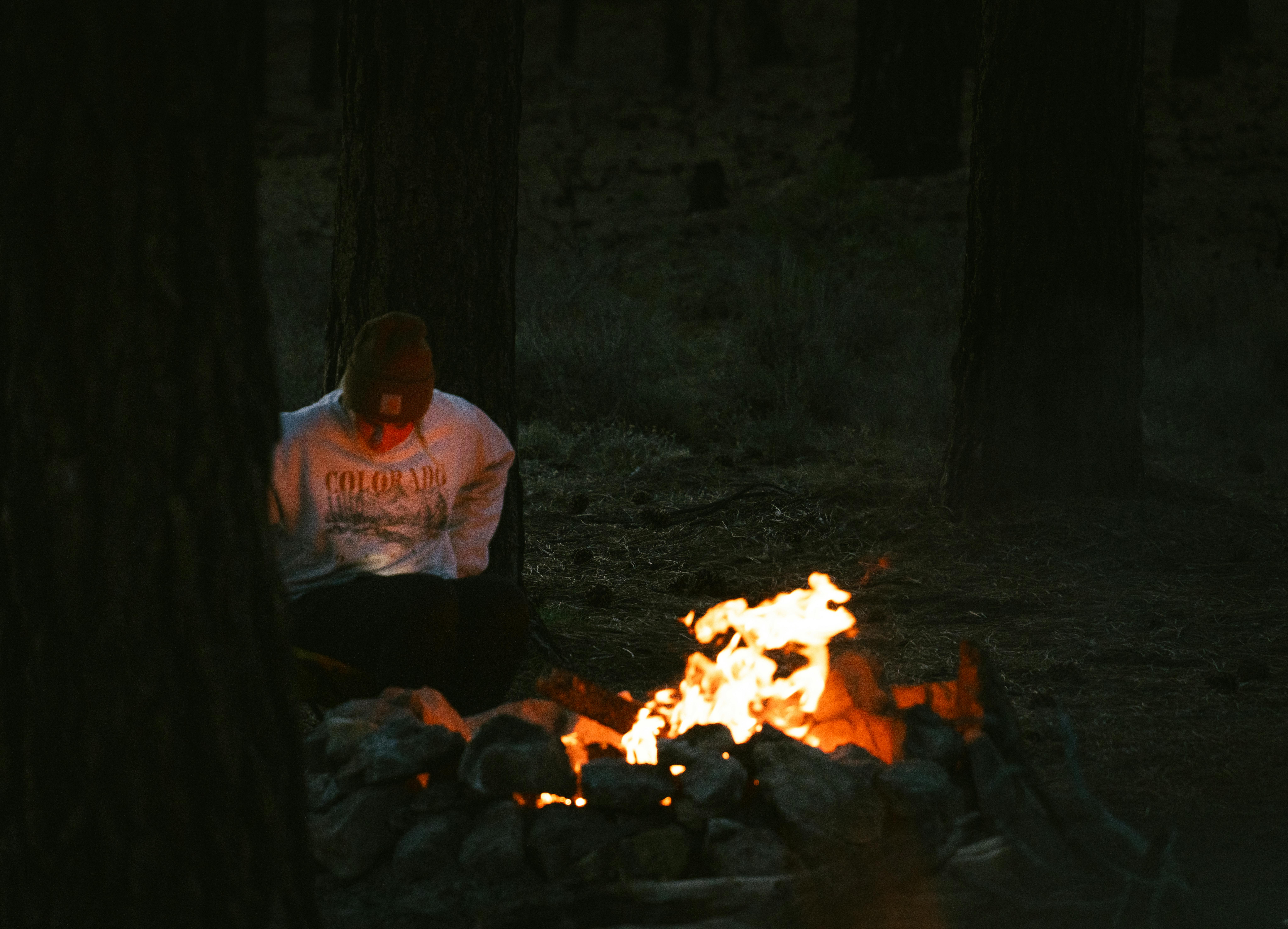
The campfire was doing what campfires do. Crackling. Popping. Throwing shadows against the pines. And I was sitting there, watching someone across the circle crack open a beer, listening to that familiar hiss, and feeling something I hadn't expected: grief. Not craving, exactly. Something stranger. I was mourning a version of myself that no longer existed, a guy who would have been three drinks deep by now, telling stories that got louder and less true with every round. That was my first night camping sober, and nobody had warned me about the grief.
They warned me about triggers. They warned me about boredom. They warned me about the social pressure. But nobody mentioned that I would sit by a fire I had built with my own hands and feel genuinely sad about losing something that was killing me. That paradox is what makes camping sober for the first time so disorienting. The very things that used to accompany your drinking, the flames, the stars, the deep quiet of the woods, become the backdrop for building something entirely new.
Here is what I have learned in five years of sober camping: the campfire is not your enemy. It is actually your greatest teacher. Yes, those flames might be tangled up with memories of drinking. The smell of woodsmoke might remind you of nights you would rather forget. But fire has been central to human gathering for over a million years. Long before alcohol existed, people sat around flames and told stories, processed their days, connected with each other. You are not betraying your recovery by loving a campfire. You are reclaiming something ancient that alcohol temporarily hijacked.
Research backs this up. A foundational study on stress recovery found that natural environments accelerate physiological calming in ways that urban settings simply cannot match. Your nervous system knows what to do with firelight and forest sounds. It has known for thousands of generations. The anxious buzz you feel on that first sober camping trip is not the wilderness failing you. It is your brain rewiring, learning that this experience can exist without the substance you once paired with it.
The trick is giving yourself permission to feel weird about it. That first night, I kept waiting for the discomfort to resolve itself. It did not. I went to bed early, feeling like I had somehow failed at camping. What I did not understand yet was that discomfort was the work. My brain was literally forming new associations, and that process is supposed to feel strange.
Here is something I wish someone had told me before my first sober trip: you do not need a week in the backcountry to get the benefits. Research on nature exposure and mental health shows that just five minutes in a green environment significantly improves mood and self esteem. Five minutes. That is barely enough time to set up a camp chair.
This matters because one of the biggest lies early sobriety tells you is that you need to feel better immediately or you are doing something wrong. You do not need to summit a fourteener or complete a twenty mile loop to earn the therapeutic effects of nature. You need to show up and stay present for five minutes at a time. When I feel that creeping anxiety on a sober camping trip now, I set a timer. Five minutes of just being outside. No phone. No tasks. Just existing in the space. By the time that timer goes off, something has usually shifted.
A Stanford study on nature and rumination found that nature walks actually reduce activity in the part of the brain associated with repetitive negative thinking. That is the exact mental loop that precedes relapse for so many of us. The same thoughts circling: I cannot do this, everyone else can drink normally, what is wrong with me. Nature interrupts that loop in ways that indoor environments do not. The wilderness is not just a nice backdrop for your recovery. It is an active participant in your healing.
Most sober camping advice focuses on that first night. And yes, the first night is hard. But here is what caught me completely off guard: day two was worse.
On the first night, you are running on adrenaline and determination. You packed your bags. You drove to the trailhead. You set up camp. You are proving something to yourself, and that energy carries you through the initial discomfort. By the second morning, that energy is spent. The novelty has worn off. And now you have to actually exist in the wilderness without your old coping mechanism.
I call this the second night shift. It is when the boredom hits, when the social dynamics get complicated, when you start wondering why you thought this was a good idea. On my first sober camping trip, I seriously considered packing up and leaving on day two. The only thing that stopped me was not having a good excuse to give my camping partners.
What I have learned since then is that the second night shift is actually where the real transformation happens. Research on wilderness therapy and addiction recovery suggests that the challenge itself is part of why outdoor experiences support sobriety. When you push through discomfort in a natural setting, you build evidence that you can handle hard things without substances. That evidence becomes armor you carry into every future difficult moment.
The practical move here is to plan something specific for day two. Not something passive like hanging around camp, but something that requires your full attention. A longer hike. Learning to identify edible plants. Fishing. Anything that occupies your hands and mind during the hours when cravings tend to peak.
The wilderness does not care that you used to drink. It only asks whether you can stay present for what is actually happening right now.
Every camping packing list covers the basics: tent, sleeping bag, water filter, first aid kit. But sober campers need a different kind of preparation. Here is what five years of alcohol free camping has taught me to bring:
This sounds small, but it matters enormously. The ritual of having something in your hand around the campfire is deeply ingrained. Bringing only water leaves a psychological gap that can feel surprisingly destabilizing. I pack sparkling water with actual flavor, good quality tea that requires preparation, or fancy mocktail ingredients that feel like an event. The goal is not to replace alcohol with a substitute. The goal is to give your hands and mouth something to do during the hours when drinking used to be automatic.
Some of the most important processing of my early sobriety happened in a tent after dark, talking into my phone or scribbling in a notebook. When you cannot numb your thoughts, they get loud. Having a place to put them, rather than just letting them rattle around your skull, is essential. I have pages from my first sober camping trips that are barely legible, just raw emotion dumped onto paper. Those pages are some of the most valuable things I own.
This might sound like planning to fail, but it is actually the opposite. Knowing that you can leave if you need to makes it easier to stay. On my first trip, I parked my car where I could access it quickly if things got overwhelming. I never used that exit, but having it there reduced my anxiety enough to get through the hard moments. As your sober camping confidence builds, you can venture further from your escape route. But there is no shame in keeping one close when you are starting out.
Cell service in the backcountry is unreliable at best. Before you leave, make sure someone in your recovery circle knows where you are going and when you will be back. If you have a satellite communicator, program in the numbers of people you can reach out to in a crisis. At Sober Outdoors, we talk a lot about how the wilderness can feel isolating in early recovery. Having a tether to your support network, even if you never use it, changes the psychological landscape of your trip.
I need to return to that grief I mentioned at the start, because it is the thing that surprised me most and the thing nobody talks about.
When you camp sober for the first time, you are not just abstaining from alcohol. You are saying goodbye to an identity. The person who could relax around a campfire with a beer. The person who told wild stories at two in the morning. The person who used drinking as a social lubricant in the awkward spaces of group camping. That person is gone. And even if that person was also miserable, sick, and destroying themselves slowly, there is still a loss to acknowledge.
Research on camping as a health intervention supports what many of us discover intuitively: time in the wilderness creates psychological space for this kind of processing. Away from the distractions of daily life, feelings that we have been outrunning finally catch up. That can feel terrifying, especially in early sobriety. But it is also an opportunity.
The first time I cried in the backcountry, I was mortified. I had hiked three miles to get away from my camping group, and I sat on a rock overlooking a valley and just sobbed. For the drinking years I had wasted. For the relationships I had damaged. For the person I was scared I might not be able to become. Nobody saw me. The mountains did not judge. And when I hiked back to camp, something had shifted. I had let myself feel something I had been avoiding for years.
If this happens to you on your first sober camping trip, let it. You are not failing. You are finally doing the work that alcohol prevented.
Part of what makes sober camping disorienting is the absence of structure that drinking used to provide. Arrive at camp, crack a beer. Finish setting up, have another. Cooking dinner, glass of wine. Sitting by the fire, keep them coming. Those rituals, as destructive as they were, created a rhythm to the camping experience.
You need new rituals. Not as replacements, but as anchors for your new way of being outdoors. Here are some that have worked for me and for others in the Sober Outdoors community:
Morning movement before anything else. Even just ten minutes of stretching or a short walk. It establishes that the day belongs to your body, not to a hangover.
Intentional fire starting. Learning to build a fire using natural materials and minimal tools turns a trigger into a meditative practice. You cannot think about drinking when you are focused on getting a flame to catch.
Sunset observation. Not photographing the sunset, not talking through it, just watching. This is a practice in presence that research on outdoor environments and emotional regulation suggests is powerful for anxiety reduction.
Nightly gratitude, spoken aloud. This might sound cheesy, but saying one thing you are grateful for before you get in your sleeping bag rewires your brain to notice the good parts of the experience. Over time, it becomes automatic.
Camping with others adds a layer of complexity that solo camping does not have. If you are camping with people who drink, you need to prepare for that. Here is what I have learned works:
Tell at least one person before the trip that you are not drinking. You do not owe anyone an explanation, but having one ally who knows the stakes makes the experience significantly less isolating. They can help redirect conversations, offer you a nonalcoholic option when drinks are being handed out, or just check in privately when things feel hard.
Have a response ready for the inevitable questions. You do not need to share your full story. Something simple like, I am taking a break or Alcohol has not been working for me lately is usually enough. Most people will respect a boundary that is stated clearly. The ones who do not respect it are telling you something important about themselves.
Create space for yourself. You do not need to be around the group every moment. Taking a solo walk when the drinking gets heavy is not antisocial. It is good recovery practice. Give yourself permission to step away and return when you are ready.
Five years into sober camping, I can tell you what nobody told me on that first awkward trip: you are not just abstaining from alcohol in a different setting. You are building a version of yourself that does not need substances to access joy, peace, or connection.
That first sober camping trip was hard. The second was slightly less hard. By the fifth or sixth, I started noticing something remarkable. I was actually enjoying myself. Not white knuckling through an experience that used to require alcohol, but genuinely savoring it. The morning coffee tasted better because I was not hungover. The hikes went further because my body was not recovering from the night before. The conversations went deeper because I was actually present for them.
This is what they do not tell you about camping sober for the first time: it is not really about camping. It is about discovering that you can exist in spaces that used to require alcohol and find them fuller, richer, and more real than they ever were before.
The wilderness does not care that you used to drink. It only asks whether you can stay present for what is actually happening right now. And once you learn that skill out there, you carry it back to every other part of your life. That is the gift of sober outdoor adventures, and it is waiting for you on the other side of that uncomfortable first night.
I will not promise you that your first sober camping trip will be easy. It probably will not be. I will promise you that it will be worthwhile. That the version of yourself waiting on the other side of that discomfort is someone worth meeting. That the wilderness has been holding space for your healing longer than you have been alive.
Pack your bag. Tell someone where you are going. And give yourself permission to feel everything that shows up. The grief. The anxiety. The unexpected moments of peace. It all belongs to your story now.
See you on the trail.
, Eli Strand